
As the leaves begin their colorful descent and the air turns crisp, something shifts within us, too.
If you’ve been feeling that pull to slow down, cozy up, and turn inward as summer fades, you’re not imagining it. Your body and mind are naturally responding to the season’s transition.
This is why autumn self-care isn’t just another wellness trend; it’s an essential practice for supporting yourself through one of nature’s most transformative times.
When daylight hours shrink and temperatures drop, our routines, energy levels, and even our immune systems need different kinds of support. Research shows that reduced sunlight exposure can affect our circadian rhythms, mood, and vitamin D levels, making intentional self-care practices more important than ever.
But here’s the good news: fall brings a unique set of self-care opportunities that summer simply doesn’t offer.
In this guide, we’ll explore fall self-care rituals for mind and body that honor this season’s natural rhythm. Whether you’re looking for autumn self-care ideas for mind body spirit, practical seasonal self-care tips for autumn, or a complete autumn self-care routine for wellness, you’ll find actionable practices that actually fit into your real life.
Let’s embrace this season of transition with intention, warmth, and genuine care for ourselves.
What’s On Deck:
- Why Autumn/Fall is a Unique Time for Self-Care
- Building Your Autumn Self Care Rituals Framework
- Physical Wellness Rituals for Autumn
- Emotional & Mental Self-Care Rituals
- Spiritual & Environmental Self-Care Rituals
- Sample 4-Week Autumn Self-Care Ritual Plan
- FAQs & Myths about Autumn Self Care
- How to Track Your Progress & Make It Stick
- Next Steps
Why Autumn/Fall is a Unique Time for Self-Care
Summer’s energy is expansive, social, and outward-focused. We stay up late chasing sunsets, pack our calendars with activities, and thrive on the abundance of long, bright days. Then autumn arrives, and suddenly that same pace feels exhausting.
This isn’t a personal failing — it’s biology.
As daylight diminishes, our bodies produce more melatonin earlier in the evening, naturally encouraging us to rest more. Our circadian rhythms shift, affecting everything from sleep quality to energy levels throughout the day. Meanwhile, the temperature drop signals our immune system to prepare for cold and flu season, requiring additional resources and rest.
The transition from summer to fall can also impact our emotional well-being. Some people experience mood changes as sunlight decreases, feeling more introspective, nostalgic, or even melancholic. Personally, all I want to do is hermit on the couch under a cozy blanket.
Understanding that these shifts are normal seasonal responses helps us approach autumn with compassion rather than resistance.
What Makes “Autumn Self Care” Different from Other Seasons
While self-care is important year-round, autumn requires a distinct approach:
- Grounding vs. Expansion: Where summer invites expansion and activity, autumn calls for grounding and consolidation. Your self-care rituals should help you feel rooted and stable during this transitional period.
- Inward Focus: Fall is nature’s time for turning inward. Trees withdraw their energy to their roots; animals prepare for hibernation. We benefit from honoring this same instinct by creating more quiet, reflective practices.
- Warmth and Nourishment: As temperatures drop, your body craves warmth; not just physically, but emotionally and spiritually. Cozy fall wellness rituals that provide comfort become especially nurturing.
- Preparation and Release: Autumn sits between the abundance of summer and the stillness of winter. It’s an ideal time for both harvesting what you’ve cultivated and releasing what no longer serves you.
All of these points to the fact that when the seasons shift, so should your self-care rituals. Let’s dive into why these adjustments are so important and how you can benefit from working with Mother Nature, instead of against her.
The Benefits of Aligning with Nature’s Rhythms
There’s profound wisdom in syncing your self-care with the seasons. The autumnal equinox — that moment when day and night achieve perfect balance — offers a powerful metaphor for our own lives. This natural balance point invites us to examine what feels harmonious and what needs adjustment.
When you align your autumn self-care habits for mental health with nature’s rhythms, you:
- Experience less resistance and more flow in your daily routines
- Support your body’s natural seasonal needs rather than fighting them
- Feel more connected to the world around you, reducing feelings of isolation
- Honor ancient wisdom about rest, harvest, and preparation that humans have followed for millennia
The trees don’t apologize for shedding their leaves. They trust the process. Your autumn self-care practices should help you do the same.
Building Your Autumn Self Care Rituals Framework
Let’s be honest: randomly trying wellness tips you see on Instagram isn’t the same as having a self-care ritual. The difference? Intention.
A ritual carries meaning. It’s a practice you return to with purpose, creating a sense of continuity and care. Before diving into specific practices, ask yourself:
- What do I need most this season? (More rest? Emotional processing? Physical warmth?)
- What did I love about summer that I want to carry forward?
- What felt draining or misaligned that I’m ready to release?
Setting this intentional foundation transforms isolated acts of self-care into a cohesive autumn self-care routine for wellness that actually supports your unique needs.
Because fall moves fast — save this autumn self-care guide on Pinterest and give yourself an easy way to slow down when life feels hectic.
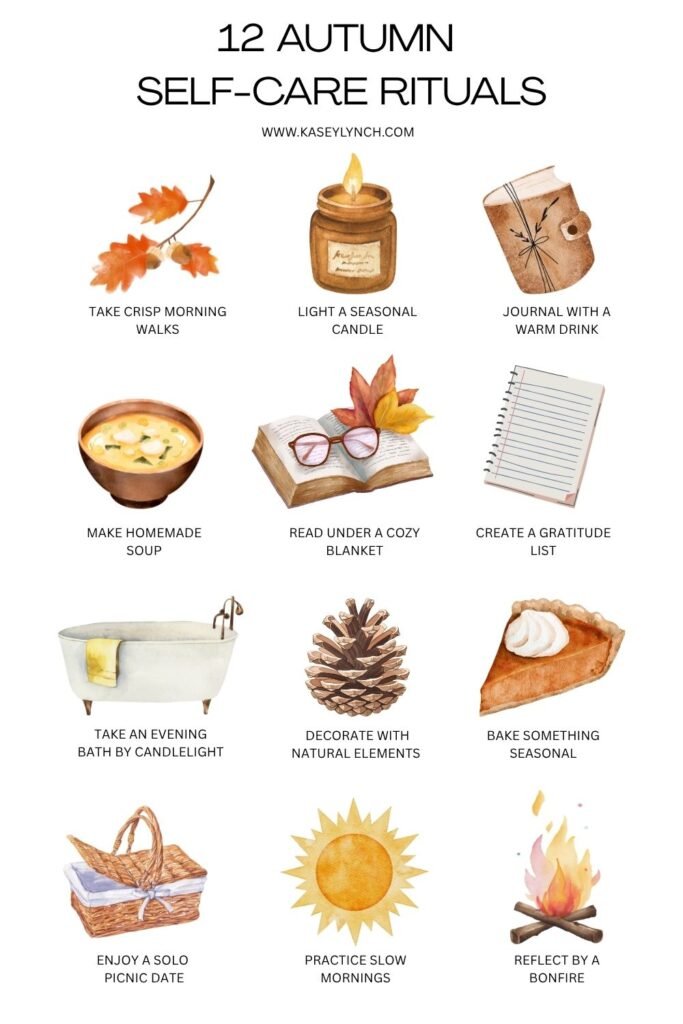

Pillars to Focus On: Mind, Body, Spirit, Environment
Effective autumn self-care touches four interconnected dimensions:
- Mind: Your mental and emotional well-being, including stress management, mood support, and cognitive rest.
- Body: Physical health practices like nutrition, movement, sleep, and immune support.
- Spirit: Your sense of meaning, connection to something larger, and inner peace — whether that’s through spirituality, nature, creativity, or reflection.
- Environment: The physical spaces you inhabit and how they support (or hinder) your wellbeing.
The most nourishing rituals often serve multiple pillars at once. A nature walk, for example, supports your body through movement, calms your mind, connects you spiritually to the earth, and literally changes your environment.
I try to habit-stack all of these elements whenever I can, ensuring I’m taking care of all versions of my body (internal and external) without getting too out of balance. We don’t always have time to do four self-care practices in a day, but we always have time to do at least one.
Simplify, Don’t Overload: Why Less is Often More
Here’s where many people sabotage their autumn self-care before they even begin: they create an overwhelming list of 47 new habits they “should” be doing.
Please don’t do this to yourself.
Start with 2-3 rituals that genuinely appeal to you. Practice them consistently for a few weeks. Notice how they feel. Then, if you’re ready, add one more. Quality and consistency beat quantity and burnout every single time.
Your fall self-care rituals should reduce stress, not create it. If your self-care routine feels like another item on an overwhelming to-do list, something needs to change.
Physical Wellness Rituals for Autumn
I know, I know. The idea of moving your body regularly when all you want to do is curl up on the couch can feel like you’re fighting yourself. But routine movement, even as we feel called to do less, will help prevent you from feeling stagnant. It’s important, trust me!
Grounding with Nature Walks, Barefoot “Earthing” & Leaf-Crunching
There’s something almost magical about walking through fallen leaves on a cool autumn day. But beyond the sensory pleasure, spending time in nature during fall offers genuine health benefits.
Earthing — the practice of walking barefoot on natural surfaces — allows electrons from the earth to enter your body, which research suggests may reduce inflammation and stress. Autumn’s cooler temperatures make this practice bracing but invigorating. Even if walking barefoot isn’t accessible to you, simply being outdoors grounds your nervous system and connects you to seasonal changes.
Try this: Schedule 3-4 nature walks per week, even if just for 15-20 minutes. Notice the colors, crunch the leaves, breathe the crisp air. Make it a walking meditation by leaving your phone behind and simply observing the season’s transformation.
Seasonal Nutrition & Diet Reset
Fall brings the harvest — literally. This is when root vegetables, squashes, apples, pears, Brussels sprouts, and hearty greens reach their peak.
Embracing seasonal eating isn’t just good for the environment; it aligns your nutrition with what your body actually needs as the weather cools.
Warm, nourishing foods support autumn self-care for immunity and stress relief:
- Root vegetables (sweet potatoes, carrots, parsnips) provide grounding energy and complex carbohydrates that stabilize blood sugar and mood
- Squashes (butternut, acorn, pumpkin) offer beta-carotene and vitamin C for immune support
- Warm spices (cinnamon, ginger, turmeric, nutmeg) have anti-inflammatory properties and create that cozy feeling we crave
- Soups and stews deliver hydration, warmth, and easy-to-digest nutrition in one comforting bowl
Try this: Dedicate Sunday afternoons to batch-cooking a big pot of seasonal soup or roasted root vegetables. Having nourishing food ready makes self-care easier during busy weeknights. I LOVE using Souper Cubes to freeze individual portions, making them easy to grab from the deep freezer and heat up on a cool night for a delicious, hot meal in 15 minutes or less.
Sleep & Circadian Rhythm Adjustments
As days shorten, your body naturally wants to sleep more, and fighting this instinct can leave you feeling perpetually exhausted. Instead of powering through with extra caffeine, consider adjusting your sleep schedule to align with autumn’s rhythm.
Aim for 8-9 hours of sleep during fall months. This isn’t laziness; it’s supporting your body’s internal clock and immune function. Create a sleep sanctuary that honors the season:
- Use blackout curtains to work with earlier darkness
- Set a consistent bedtime routine that begins with dimmed lights
- Keep your bedroom cool (60-67°F is ideal)
- Avoid screens for at least an hour before bed
- Consider warm herbal tea (chamomile, passionflower, or valerian) as part of your wind-down
I started going to sleep closer to 8pm instead of 9pm this season, and it’s been a great decision on my part. Gradually shift your bedtime 15 minutes earlier each week until you’re getting the rest your body craves.
Movement & Gentle Activity That Fits the Season
Autumn isn’t the season for pushing yourself through intense workouts (unless that genuinely feels good to you). This is a time for mindful, gentle movement that keeps your body healthy without depleting your energy reserves.
Consider:
- Outdoor yoga in the morning light to greet the day
- Gentle stretching or yin yoga in the evening to release tension
- Walking or hiking through changing landscapes
- Dancing in your living room to your favorite music
- Tai chi for flowing, meditative movement
The key is choosing activities that leave you feeling energized rather than exhausted, connected rather than depleted.
Emotional & Mental Self-Care Rituals
Do not feel like you have to adopt or try every single one of these ideas. Choose the one that resonates with you the most! This season isn’t about maxing out our productivity; it’s about slowing down and honoring what we need.
Keep that in mind when you’re reading the recommendations below.
Journaling, Reflection & Releasing What No Longer Serves
Just as trees release their leaves, autumn invites us to release what we no longer need. Journaling offers a powerful way to process emotions, gain clarity, and consciously let go.
Powerful autumn journaling prompts:
- What do I need to let go of as this season shifts?
- What did I learn or gain during the warmer months?
- What do I want to cultivate or harvest in my life right now?
- Where do I need more balance between light and dark, doing and being?
- What would it feel like to trust the transitions I’m experiencing?
Try this: Create a weekly journaling ritual. Light a candle, make tea, and spend 15-20 minutes writing without editing yourself. Some people find morning pages (3 stream-of-consciousness pages first thing, coined by The Artist’s Way) especially clarifying during seasonal transitions.
Cultivating Gratitude & Mindfulness in Autumn
Autumn literally provides the harvest — a perfect metaphor for recognizing abundance. Gratitude practices during this season feel especially potent and aligned.
Simple gratitude rituals:
- Keep a bedside journal for listing 3 things you’re grateful for each night
- Take Polaroid photos of beautiful autumn moments as a visual gratitude log
- Share appreciation with someone weekly (a text, note, or call)
- Create a gratitude jar with notes you can revisit on harder days
Mindfulness — the practice of present-moment awareness — helps you actually experience autumn rather than rushing through it. Try eating one meal daily without distractions, fully tasting and appreciating your food. Or practice “sensory walks” where you focus on what you see, hear, smell, and feel moment by moment.
Tech-Detox, Unplugging & Cozy Evening Rituals
As evenings grow longer and darker, many of us default to scrolling on our devices until bedtime. But blue light exposure disrupts melatonin production, making sleep more difficult precisely when we need it most.
Create cozy fall wellness rituals that replace screen time:
The Golden Hour Wind-Down: Start your evening routine an hour before bed. Dim the lights, put devices away, and choose one comforting activity:
- Take a warm bath with Epsom salts and essential oils (lavender, eucalyptus, cedarwood)
- Read an actual book (paper or e-reader with warm light settings)
- Do gentle stretching or restorative yoga
- Have a cup of herbal tea while listening to calming music
- Practice a guided meditation
Try this: Commit to one tech-free evening per week. Notice how your sleep quality, mood, and sense of peace improve.
Related: Mindful Living in the Digital Age: Navigating Technology for Enhanced Well-being
Managing Seasonal Mood Shifts & Transitions
If you notice your mood dipping as daylight decreases, you’re not alone. Seasonal mood changes affect many people and can range from mild energy dips to more significant seasonal affective patterns.
Proactive strategies for supporting mental health in autumn:
- Light exposure: Get outside within an hour of waking, even on cloudy days. Morning light helps regulate circadian rhythms.
- Vitamin D: Consider supplementation after consulting with your healthcare provider, especially if you live in northern climates.
- Social connection: Isolation can worsen seasonal mood changes. Schedule regular connections with friends and loved ones. I do weekly pasta dinner dates with my best friend, and they’ve truly changed my life.
- Professional support: If mood changes feel significant or overwhelming, reach out to a therapist or counselor. This is wise self-care, not weakness.
- Movement: Regular physical activity powerfully supports mental health and mood regulation.
Remember: acknowledging that you’re struggling is the first step toward caring for yourself effectively!
Spiritual & Environmental Self-Care Rituals
Harnessing the Autumnal Equinox for Ritual & Alignment
The autumnal equinox — typically around September 21-23 — marks the moment when day and night stand in perfect balance before darkness begins to dominate. This natural equilibrium point offers a powerful opportunity for ritual and intention-setting.
Equinox ritual ideas:
- Balance assessment: Reflect on what feels balanced in your life and what doesn’t. Write two lists: areas where you’re giving too much, and areas where you’re not giving enough.
- Candle ritual: Light one candle at sunset on the equinox. As you watch the flame, meditate on balance, transition, and trust in natural cycles.
- Gratitude altar: Create a small display with items representing your harvest—photos of good moments, symbols of accomplishments, natural objects that bring you joy.
- Release ceremony: Write what you’re ready to release on biodegradable paper. Burn it safely (in a fireplace or outdoor fire pit) or bury it in the earth.
Even if the equinox has passed, autumn’s entire arc carries this energy of balance and transition.
Creating a Cozy, Grounding Environment
Your physical environment profoundly affects your well-being. As you spend more time indoors, creating spaces that nurture and comfort you becomes essential autumn self-care.
Sensory elements that create coziness:
- Scent: Pumpkin spice, cinnamon, apple, cedarwood, vanilla, and woodsy fragrances evoke autumn’s warmth. Use candles, essential oil diffusers, or a simmer pot on the stove. I’m enjoying the scent of a clove, apple, cinnamon, and bay leaf simmer pot right now.
- Texture: Soft blankets, plush pillows, thick rugs, and cozy sweaters provide tactile comfort. Layer textures to create nest-like spaces for reading, resting, or relaxing.
- Lighting: Replace harsh overhead lights with warm, ambient lighting. Use candles, string lights, salt lamps, or warm-bulb table lamps to create a gentle glow.
- Color: Incorporate autumn’s palette — rust, gold, deep green, burgundy, warm brown — through throw pillows, blankets, or simple decor changes.
Try this: Create one “sanctuary space” in your home dedicated to rest and restoration. It might be a reading corner, a meditation cushion by a window, or simply your bed made especially inviting with soft linens and pillows.
Decluttering, Slowing Down & Preparing for Winter
Autumn’s harvest theme includes both gathering and clearing. Just as farmers separate wheat from chaff, this is an ideal time to declutter your physical and mental space.
Mindful decluttering approach:
- Choose one area per week (a drawer, closet, room, or digital space)
- Keep only what you genuinely use or love
- Donate or recycle items that have served their purpose
- Create clear, organized spaces that feel calm rather than chaotic
This isn’t about perfectionism or minimalism trends. It’s about removing obstacles to your peace and creating space for what matters most during the darker months ahead.
Slowing down is equally important. Our culture often resists autumn’s invitation to rest, pushing productivity even when our bodies crave restoration.
Practice saying no to commitments that deplete you.
Build in buffer time between activities.
Give yourself permission to do less and be more.
Connecting with Nature & the Elements
Even as temperatures drop, maintaining a connection with nature supports your wellbeing profoundly. Autumn offers unique opportunities for outdoor rituals that summer and winter don’t provide.
Seasonal nature connection practices:
- Star-gazing: Longer nights and crisp air create perfect conditions for watching the stars. Learn constellations or simply marvel at the night sky.
- Moonlight walks: The full moon in autumn (especially the Harvest Moon in September) provides beautiful natural lighting for evening walks.
- Collect natural objects: Gather leaves, acorns, pinecones, or interesting seed pods for nature tables or gratitude altars.
- Meditative observation: Sit outside for 10 minutes and simply notice how nature is changing. What colors appear? What sounds do you hear? How does the air feel?
- Fire connection: Safely build or tend a fire (fireplace, fire pit, or even candles). The element of fire carries special significance in autumn.
These practices ground you in the present moment and remind you that you’re part of nature’s cycles, not separate from them.
Sample 4-Week Autumn Self-Care Ritual Plan
Ready to put these ideas into action? Here’s a gentle, progressive fall self-care challenge that builds sustainable habits without overwhelming you.
Week 1: Reset & Grounding
Focus: Establishing foundations and connecting with the season
Daily practices (10-15 minutes):
- Morning: 5-minute gentle stretching or breathing exercises
- Evening: Write 3 things you’re grateful for
Weekly practices:
- Take 3 nature walks, noticing seasonal changes (30 minutes each)
- Create one cozy space in your home
- Adjust bedtime 15 minutes earlier
Reflection prompt: What feels different about this season? What do I need most right now?
Week 2: Nutrition & Movement
Focus: Nourishing your body with seasonal foods and joyful movement
Daily practices (15-20 minutes):
- Morning: Warm lemon water or herbal tea to start your day
- Incorporate one seasonal food into your meals
- Move your body in a way that feels good (walk, dance, stretch, yoga)
Weekly practices:
- Batch cook seasonal soup or roasted vegetables
- Try one new autumn recipe
- Take 2-3 outdoor walks or exercise sessions
Reflection prompt: What foods make me feel most nourished? What movement brings me joy?
Week 3: Emotional Release & Reflection
Focus: Processing emotions and releasing what no longer serves
Daily practices (10-20 minutes):
- Morning or evening: Journal for 10 minutes
- Practice 5 minutes of mindfulness or meditation
- Do one small thing that brings you joy
Weekly practices:
- Complete the “release what no longer serves” journaling prompts
- Have a tech-free evening with cozy rituals
- Connect meaningfully with a friend or loved one
Reflection prompt: What am I ready to let go of? What do I want to cultivate instead?
Week 4: Environment & Winter Preparation
Focus: Creating supportive spaces and establishing sustainable rhythms
Daily practices (10-15 minutes):
- Morning: Set a positive intention for the day
- Evening: 10-minute wind-down routine (tea, stretching, or reading)
Weekly practices:
- Declutter one area of your home
- Review what rituals from weeks 1-3 felt best
- Create a simplified, sustainable routine for continuing forward
- Plan one cozy activity you’re excited about for the coming weeks
Reflection prompt: Which practices do I want to maintain? How can I make them sustainable?
Want to keep your self-care consistent all season long? Download your printable Autumn Self-Care Ritual Tracker and check off each day as you go. Download Now
Adapting the Plan
Short on time? Choose just one daily practice and one weekly practice from each week.
Limited outdoor access? Replace nature walks with window gazing, indoor plant care, or bringing natural elements inside.
Different energy levels? Some weeks you’ll feel motivated; others you’ll need to scale back. Both are okay. Self-care adapts to your needs rather than demanding perfection.
FAQs & Myths about Autumn Self Care
Do you need special “fall only” rituals?
No! The best self-care practices are ones you can maintain year-round with seasonal adjustments. However, autumn’s unique characteristics — shorter days, cooler weather, transitional energy — make certain practices especially relevant now.
Think of it this way: you might practice gratitude all year, but autumn’s harvest energy makes gratitude work feel particularly potent. Similarly, you need good sleep year-round, but adjusting your sleep schedule as daylight decreases is a specific autumn consideration.
Is this just about “cozying up” or deeper wellness?
Both! There’s nothing superficial about comfort and coziness. These are legitimate needs, especially as we spend more time indoors. Soft blankets and warm tea aren’t frivolous; they’re tangible ways to provide yourself comfort and care.
That said, effective autumn self-care ideas for mind body spirit go beyond aesthetic coziness to address deeper needs: emotional processing, immune support, circadian rhythm health, stress management, and spiritual connection.
The most nourishing practices often combine surface comfort with deeper intention.
How to adapt rituals for busy schedules or limited outdoor access
For busy schedules:
- Start impossibly small (5 minutes daily beats 0 minutes)
- Combine rituals with existing habits (gratitude while brushing teeth, stretching during coffee brewing)
- Use “micro-moments” of self-care throughout your day
- Remember that rest is productive, especially in autumn
- Let go of perfection; inconsistent practice is still practice
For limited outdoor access:
- Bring nature indoors with plants, flowers, or natural objects
- Open windows for fresh air when possible
- Use nature sounds, videos, or photographs
- Practice “window nature watching” to observe seasonal changes
- Create indoor grounding practices like barefoot time on natural materials
- Prioritize the outdoor time you do have, even if brief
Is autumn self-care only for change-averse people?
Not at all! Everyone experiences seasonal transitions, whether or not you consciously notice them. Your body’s circadian rhythms shift with daylight changes regardless of your personality type or preferences.
Autumn self-care is all about supporting yourself through change. People who love change benefit from grounding practices that help them integrate new experiences. People who find transitions challenging benefit from rituals that create stability and comfort.
Different people need different things, but everyone benefits from intentional seasonal support.
How to Track Your Progress & Make It Stick
Using Habit Trackers and Check-In Prompts
Tracking your autumn self-care habits for mental health helps you notice patterns, celebrate progress, and adjust what isn’t working. But tracking should serve you, not become another source of pressure.
Simple tracking methods:
Habit tracker: Create a simple grid with your chosen rituals down the side and dates across the top. Mark each day you complete a practice. (You can download free templates or create your own in a notebook.)
Weekly check-in journal: Every Sunday, answer three questions:
- What self-care practices supported me most this week?
- What felt challenging or didn’t work?
- What’s one small adjustment I want to try this coming week?
Self-compassion tracker: Instead of just tracking completion, note how each practice made you feel. This helps you identify what truly serves your well-being versus what you think you “should” do.
Monthly review: At each month’s end, reflect on what shifted. Do you feel more grounded? Is your sleep better? Has your mood stabilized? Are you handling stress differently?
Committing with Flexibility
Here’s the paradox of sustainable self-care: you need both commitment and flexibility.
- Commitment means: showing up even when you don’t feel like it, making self-care a priority rather than an afterthought, and being willing to start again after you fall off track.
- Flexibility means: adjusting practices when they’re not working, giving yourself permission to modify the plan, recognizing that some days you’ll do the bare minimum and that’s enough.
The goal isn’t perfection. It’s cultivating practices that genuinely support your wellbeing, season after season, year after year.
Next Steps
As autumn unfolds around you — in the changing leaves, the slanting light, the crisp morning air — you have an opportunity. You can rush through this season distracted and depleted, or you can embrace autumn self-care as a practice of coming home to yourself.
The rituals we’ve explored aren’t about adding more to your overwhelmed plate. They’re about aligning with nature’s wisdom, supporting your body and mind through seasonal changes, and creating pockets of peace in your days.
Whether you start with fall self-care rituals for your body through seasonal nutrition, support your mental health through journaling and reflection, or create cozy environmental spaces that nurture your spirit, every small practice matters.
Remember: autumn asks us to slow down, turn inward, and release what we no longer need. Just as trees trust the process of letting go, you can trust that caring for yourself through this transition isn’t selfish — it’s essential.
Which ritual will you try this week?
Choose just one practice from this guide that genuinely appeals to you. Not the one you think you should do — the one that makes you feel a little spark of “yes, that sounds nourishing.”
Start there. Practice it for a week. Notice how it feels. Then, if you’re ready, add one more.
Join Our Autumn Self Care Community
Ready to dive deeper into seasonal self-care tips for autumn?
- Subscribe to our newsletter “Sundays With Me” for weekly wellness inspiration
- Follow me on Pinterest for visual inspiration and cozy fall wellness rituals
- Sign up for our seasonal self-care challenges throughout the year
This autumn, let’s embrace the season’s invitation to slow down, turn inward, and care for ourselves with intention. Nature shows us that transition and rest are not only natural but necessary for growth.
What will your autumn self-care practice look like? The season is waiting, and so are you.
Remember: The most powerful self-care ritual is the one you’ll actually practice. Start small, stay consistent, and trust the process — just like the trees do every fall.



[…] Related: The Complete Guide to Autumn Self Care Rituals […]