
Last Updated on 2 weeks ago by Kasey Lynch
I know what it’s like to wake up already exhausted. To lie there with your eyes still closed, feeling the weight of the day before it even begins. To reach for your phone not because you want to, but because facing the quiet reality of another morning feels like too much.
If you’re neurospicy, burnt out, or both, mornings can feel impossible. Not because you’re lazy or undisciplined, but because your nervous system is already maxed out. Your brain is protecting you the only way it knows how — by making you want to avoid the very act of starting.
This isn’t about becoming a “that girl” who meditates at 5 am and journals about gratitude while sipping green juice.
This is about building a gentle bridge back to yourself. A morning routine for mental health is a short, repeatable set of actions that reduces stress, supports emotional regulation, and helps you re-enter your day with agency — not urgency.
What I’m sharing works even when motivation is low. It’s built around three things: nervous system safety, light, and one selfish anchor that changes everything.
What’s On Deck:
- Why mornings are so hard when you're burnt out or neurospicy
- The one non-negotiable that resets everything: skincare
- The framework — Light → Body → Skin → Mind
- The morning routine for mental health — choose your adventure (by capacity)
- Why your morning routine should evolve with the seasons
- Tools that actually help, not overwhelm
- When mornings feel impossible
- FAQs
- You don't need to fix your life before 9 am
Why mornings are so hard when you’re burnt out or neurospicy
When you’re dealing with burnout, ADHD, anxiety, or depression, mornings hit differently. Task initiation feels like pushing through concrete. The simplest actions — getting out of bed, brushing your teeth, deciding what to wear — become monumental.
This isn’t a character flaw. It’s how your brain works when it’s overwhelmed.
Avoidance is self-protection, not failure. Your nervous system is trying to keep you safe from what feels like too much, too fast, too soon. But here’s what research consistently shows: predictable routines reduce anxiety and decision fatigue. Morning light exposure supports mood and circadian rhythm regulation. Small embodied actions increase your ability to follow through later in the day.
The reframe that changed everything for me was this: you don’t need more discipline. You need less friction.
The one non-negotiable that resets everything: skincare
I’m going to tell you something that might sound superficial, but it’s the truth that unlocked my mornings: if skincare doesn’t happen, nothing else does.
Not meditation. Not exercise. Not journaling. Skincare.
Because skincare is the entry point, not the add-on. It’s the one entirely selfish act that says, “I’m here. I’m worth this small moment of care.”
Here’s why it works psychologically. Skincare is sensory grounding — the feeling of water on your face, the texture of a cleanser, the coolness of moisturizer. It’s a future-self commitment, a tiny act of delayed reward that says you believe there will be a tomorrow worth showing up for. And it’s identity reinforcement: when you wash your face, you’re not just cleaning skin. You’re practicing the belief that you’re someone who takes care of themselves.
This is your anchor habit. Everything else stacks onto this. If you do nothing else in the morning, make time for your skincare. It’s not vain. It’s survival.
“If I don’t make time for my skincare, I won’t make time for myself.”
The framework — Light → Body → Skin → Mind
This is the structure that makes everything easier. Four steps, each one building on the last, creating the least amount of friction possible.
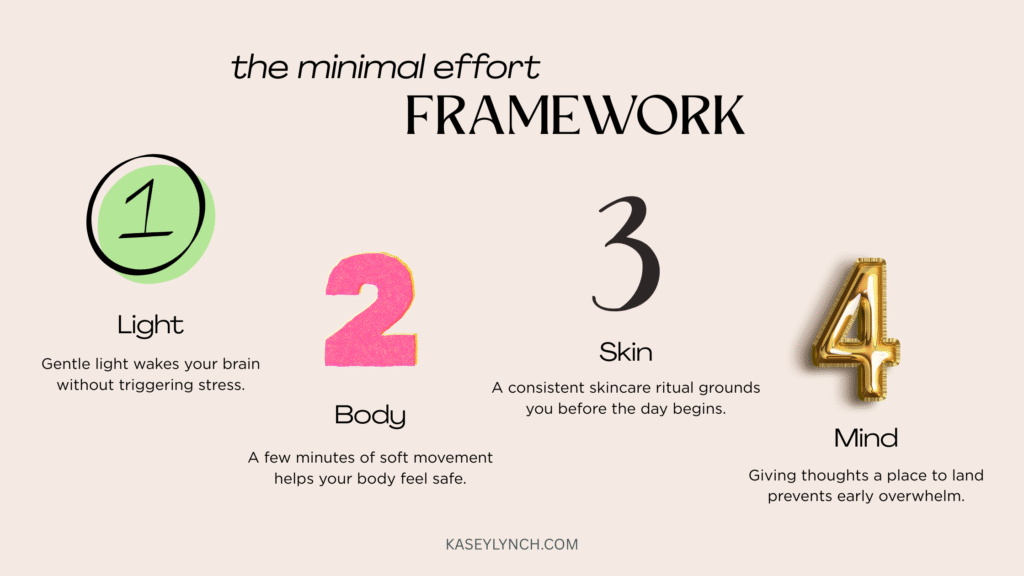
1. Light (wake the brain gently)
Abrupt alarms spike cortisol and jolt your nervous system into fight-or-flight mode before you’ve even opened your eyes. Light is different. Light is a biological signal that tells your brain, “It’s safe to wake up.”
You don’t need to fling open the curtains or blast overhead lights. Even soft, gradual light — like a sunrise alarm clock — can help ease your circadian rhythm into wakefulness without the shock.
2. Body (minimal movement, not workouts)
Two to five minutes counts. You’re not training for anything. You’re not trying to “earn” your breakfast or prove your discipline.
Warmth beats intensity every time. Gentle stretching, swaying side to side, walking to the window — whatever feels like a kindness, not a task.
3. Skin (your anchor ritual)
Wash, tone, moisturize. Same order every day. Consistency matters more than the products you use. This is the moment you show up for yourself, no matter what else happens.
4. Mind (give your thoughts somewhere to go)
Journal, reflect, or sit in intentional silence. The goal is to give your racing thoughts somewhere to land so they don’t spiral into doomscrolling or overwhelm before you’ve even left your bedroom.
The morning routine for mental health — choose your adventure (by capacity)
Here’s the part where I need you to be honest with yourself. Don’t pick the routine that sounds impressive. Pick the one that matches your actual capacity today.
The 5-Minute “I don’t want to be alive yet” routine
This is for the mornings when getting vertical feels like a win.
- Sit up, feet on floor
- Turn on a light or turn off your sunrise alarm clock
- Splash your face or cleanse
- Moisturize (no skipping)
- Take one grounding breath
That’s it. You did it. You showed up. Let that be enough.
The 15-Minute “slow but supportive” routine
This is for when you have a little more in the tank but still need gentleness.
- Wake with a Hatch Restore — sunrise simulation and white noise to quiet racing thoughts
- Skincare ritual — full but simple: cleanse, tone, moisturize
- 3 minutes of movement — stretch, walk around your room, sway to music
- 2–3 journal lines:
- How do I actually feel?
- What would support me today?
The 30-Minute “I’m ready to show up” routine
This is for the rare mornings when you feel resourced and want to lean into care.
- Extended skincare routine
- Walk or intentional movement
- Journaling or reading something that grounds you
- Warm breakfast or tea
Important: Pick ONE version. Don’t try to force yourself into the 30-minute routine when you’re operating at 5-minute capacity. That’s not self-care. That’s self-sabotage.
Why your morning routine should evolve with the seasons
Here’s something no one tells you: the same routine will not support you year-round. Nature doesn’t work that way, and neither do we.
Winter
Dark mornings create more resistance. Your body is literally fighting against the lack of light. This is when you need to lean on sunrise alarms, indoor bright light, and extra warmth and slowness.
Normalize lower output during these months. You’re not broken. You’re responding to your environment.
Spring
Energy starts to return, but don’t rush it. Add outdoor light as early as you can manage. Approach your routine with curiosity, not pressure. Let yourself re-emerge slowly.
Summer
Earlier light means higher stimulation. Your nervous system might feel more activated without you realizing it. This is when you need extra grounding and regulation. Don’t overbook your mornings just because you have more daylight.
Fall
Fall is a transition season, which means it’s time to reinforce your routines before winter hits and motivation dips. This is when you prep your support tools — order that sunrise alarm, stock up on cozy items, and get ahead of the darkness.
Tools that actually help, not overwhelm
I’m only going to recommend things I actually use or believe in. This isn’t about buying your way to wellness. These are nervous system supports, not magic fixes.
Hatch Restore (personal experience)
This changed my mornings and my sleep more than anything else. The Hatch Restore 3 is a sunrise alarm clock with wind down routines and white noise options that help quiet racing thoughts. It wakes you with gradually increasing light instead of a jarring alarm, which means less REM disruption and a gentler nervous system response.
If you struggle with mornings, especially in winter, this might be the one tool worth investing in.
Red Light Devices (Optional, Gentle Support)
Red light is a calming, non-stimulating light you can use in the morning or evening. It won’t wake you up the way blue light does, but it can support mood regulation and circadian rhythm without overstimulation.
You don’t need the most expensive device — you need one that works reliably for mood and rhythm support.
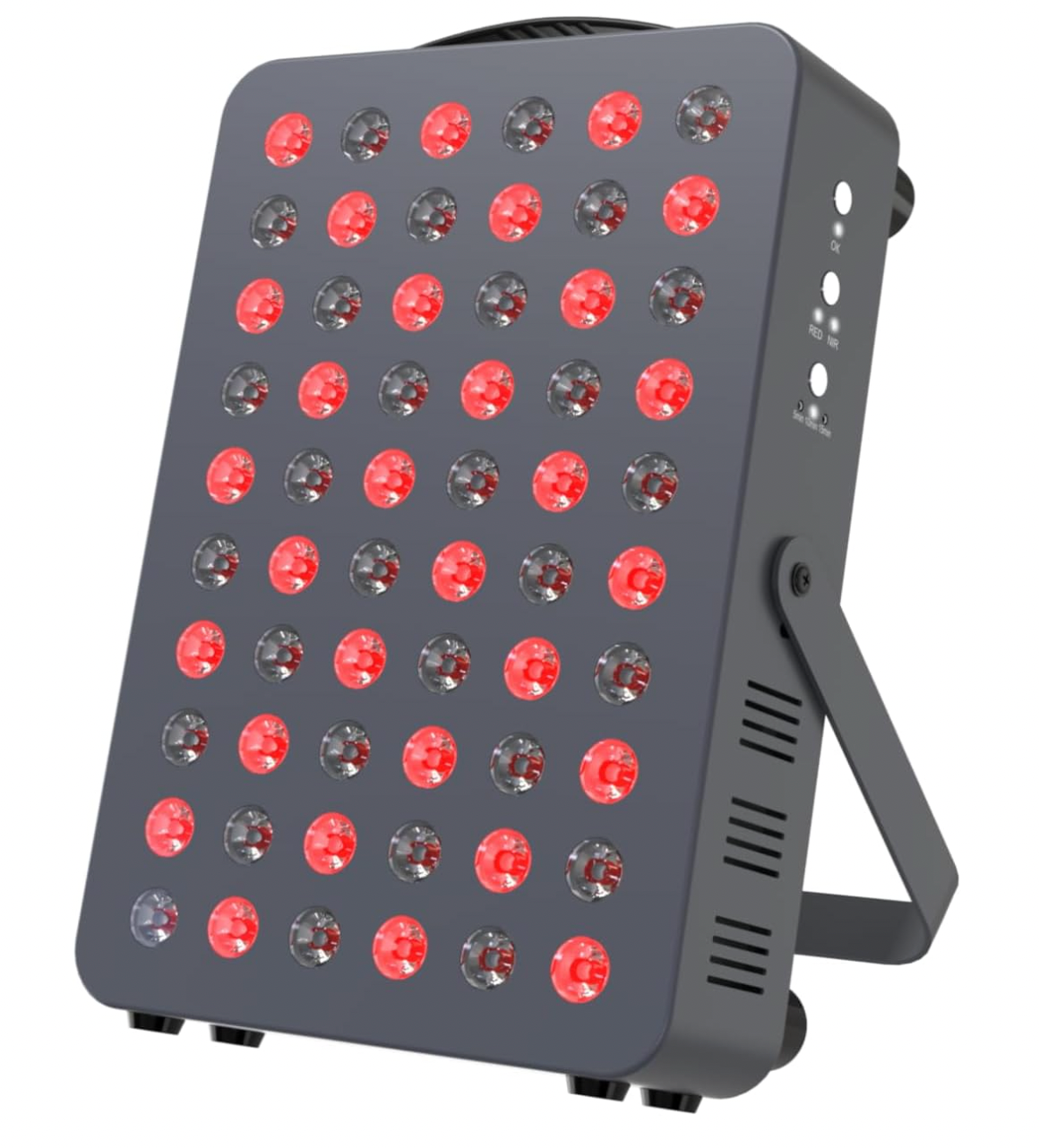

- Winter mornings or low-light environments
- Those who want something that’s easily accessible at home and on the go

- Nightstand lamps
- Evening routines
- Anyone who gets overwhelmed by “wellness tech”
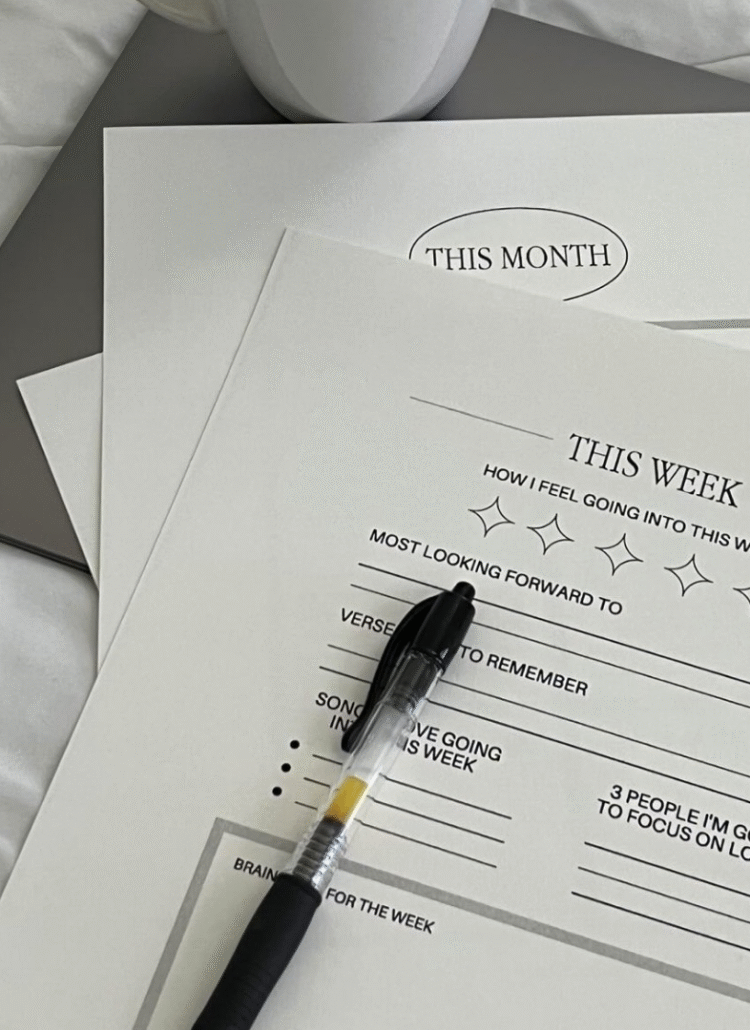
Journals for Daily Mental Check-Ins
The best journals for this kind of work are guided, one-page-a-day, and free from toxic positivity. You want something that meets you where you are — not where you think you should be.
If you want structure → choose a guided journal
If you want freedom → choose a blank one
If you want zero friction → choose one page per day
| Journal Type: | Ideal for: | Purchase Links: |
| Five Minute Journal | – People rebuilding consistency – Individuals new to journaling – Mornings when you don’t want to “think,” just respond | Support Your Day |
| INSIDE THEN OUT Prompt Journal | – Deeper emotional processing – Burnout recovery – Those who want more than gratitude lists | Choose Ease |
| 10-Minute Morning & Night Journal | – The neurspicy population – Individuals navigating avoidance or emotional overwhelm – Mornings where clarity feels foggy | Add When Ready |
| Paperage Journal (Lined or Dotted) | – Stream-of-consciousness journaling – Pairing with your own prompts – Anyone resistant to structured journaling | Take a Look — no pressure |
When mornings feel impossible
Sometimes depression is too heavy. Sometimes avoidance is the only option you have. Sometimes survival is the win, and routines feel like a cruel joke.
I need you to know: this is real, and it’s okay.
Sometimes routines help. Sometimes you need more support — therapy, medication, a friend who checks in, a break from expectations. Both are okay. You’re allowed to need more than a morning routine can give you.
If you’re in a season where getting out of bed is the entire routine, that’s enough. You don’t owe anyone — including yourself — more than you have.
FAQs
What is a morning routine for mental health?
A morning routine for mental health is a short, repeatable set of actions that reduces stress, supports emotional regulation, and helps you re-enter your day with agency instead of urgency. It’s not about productivity. It’s about reconnection.
What if I hate mornings?
Then we make them shorter, gentler, and built entirely around what feels safe. You don’t have to love mornings. You just have to survive them with a little more ease.
Is a slow morning routine better for anxiety?
Yes. Slow mornings reduce decision fatigue and give your nervous system time to regulate before the demands of the day begin. Rushing spikes cortisol. Slowness signals safety.
How do I stay consistent when I’m burnt out?
Lower the bar. Make your routine so small that even on your worst day, you can do it. Consistency comes from choosing the version that matches your capacity, not forcing yourself into the “ideal” version when your energy doesn’t allow it.
Can skincare really count as self-care?
Absolutely. Skincare is sensory grounding, future-self commitment, and identity reinforcement all in one. It’s not superficial. It’s one of the most accessible acts of care you can offer yourself daily.
You don’t need to fix your life before 9 am
This morning routine for mental health isn’t about becoming someone new. It’s about re-entering yourself — gently, repeatedly, without urgency.
You don’t need to meditate for an hour or run five miles or write three pages of gratitude. You need to wash your face, turn on a light, and take one breath that says, “I’m here. I’m trying. That’s enough.”
Ready to start?
- Save this to Pinterest for when you need it
- Try the 5-minute version tomorrow morning
- Explore the tools that might support you
- Join The Weekly Ritual for gentle support in your inbox every Sunday
You’re not starting from scratch. You’re just finding your way back.



Leave a Reply