Last Updated on June 17, 2026 by Kasey Lynch
If you’ve been shopping online and staring at an $8 pack of underwear next to a $28 organic pair, wondering what’s the actual difference, you’re not alone.
Organic cotton underwear has had a serious moment in the wellness space, but is it actually worth the premium, or is it just clever marketing?
Here’s the honest answer: organic cotton and conventional cotton perform the same when it comes to breathability and comfort.
The real differences come down to what’s in the fabric before it gets to your body, and what kind of impact you want your purchases to have.
Let’s break it all down, including what I actually found after testing and scoring over a dozen pairs of organic cotton underwear.
Table of Contents
- What Is Organic Cotton, Really?
- The Case for Organic Cotton Underwear
- The Honest Cons
- What the Scorecard Actually Shows
- So, Is Organic Cotton Underwear Worth It?
- When to Go Beyond Organic Cotton: High-Sweat & Active Days
- What About Bamboo and TENCEL™ for Everyday Wear?
- What Certifications Should You Look For?
- FAQ: Is Organic Cotton Underwear Worth It?
- The Bottom Line
What Is Organic Cotton, Really?
Organic cotton comes from the same plant as regular cotton, but it’s just grown and processed differently. Certified organic cotton is cultivated without synthetic pesticides, artificial fertilizers, or genetically modified seeds.
To carry a legitimate certification like GOTS (Global Organic Textile Standard) or OEKO-TEX Standard 100, the entire supply chain — from farm to finished garment — must meet strict environmental and social standards. That last part matters.
A garment can use organically grown fibers and still be processed with chlorine bleach, formaldehyde-based finishes, or synthetic dyes. GOTS certification closes that loophole by covering every stage of production.
So when you’re shopping, look for the certification mark, not just the word “organic” on the label.
Related: Merino Wool vs Organic Cotton: A Practical Guide for Low-tox Living
The Case for Organic Cotton Underwear
1. Lower Potential Toxin Load
Conventional cotton is one of the most chemically intensive crops on Earth. According to The Organic Center’s 2024 report, the top 10 pesticides used on conventional U.S. cotton include six that are considered possible, probable, or known carcinogens, and four classified as endocrine disruptors. Globally, cotton accounts for a significant share of world pesticide use — despite covering only about 2.5% of agricultural land.
The question of how much of this ends up in finished clothing is legitimately complex. A 2004 research report found that pesticides applied during conventional cotton production can be detected as residues in finished garments. Studies from Greenpeace International also showed that some harmful chemicals remain in clothing even after washing.
The science isn’t definitive enough to say exactly how much is absorbed through skin, but for underwear, which sits against your most sensitive tissue all day, it’s a reasonable area of concern.
Organic cotton eliminates this risk upstream. No pesticides in the field means no pesticide residues to worry about in the final garment.
2. Reduced Environmental Impact
Organic cotton farming uses up to 91% less water than conventional cotton (per Textile Exchange’s Organic Cotton Market Report), eliminates toxic runoff into waterways, and prohibits synthetic fertilizers — a major source of greenhouse gas emissions. If supporting more regenerative farming practices matters to you, organic cotton is an easy place to act on that.
3. Potentially Gentler on Sensitive Skin
GOTS-certified organic cotton avoids chlorine bleaching and GOTS-prohibited synthetic dyes and finishes. For people with contact dermatitis, eczema, or chemical sensitivities, this can make a meaningful difference. The certification also prohibits PFAS — the class of “forever chemicals” that have been found in some synthetic and even conventional textile products.
The Honest Cons
1. Higher Price Point
Organic cotton costs more to produce — stricter farming practices, more labor-intensive harvesting, and the certification process itself all add up. You’ll typically pay more per pair compared to conventional options. Whether that premium is worth it depends on your priorities (more on that below).
2. Performance Is the Same as Conventional Cotton
Let’s be clear: organic cotton does not breathe better, wick moisture better, or feel noticeably softer than high-quality conventional cotton. The fiber is identical; it’s the growing and processing conditions that differ.
If you’re choosing between organic and conventional cotton purely on comfort and function, you won’t notice a difference.
3. Fit and Construction Still Matter More Than Fabric Alone
After testing over a dozen pairs across conventional and organic cotton brands, the scorecard made one thing very clear: the fabric certification is only part of the picture. Gusset construction, fit, and build quality determine whether underwear is actually comfortable to wear. A perfectly certified organic cotton pair that fits poorly isn’t serving your health or comfort.
4. Greenwashing Is Real
Not every brand that says “organic” is telling the whole story. Without GOTS or OEKO-TEX certification, “organic” on a label can mean very little. Always look for the certification mark, not just the marketing claim.
One pair I tested — the Pact Organic Everyday Lace Thong — scored a 74 partly because it had no material disclosure for the lace waistband, despite marketing itself as an organic brand. That’s a red flag worth noting.
What the Scorecard Actually Shows
After hands-on testing of almost two dozen pairs across multiple brands, here’s what the rankings revealed — and what they tell us about organic cotton in practice.
Excellent (90–100): The Top Performers
Huha Thong Mineral Undies — Score: 93 (Full review here)
The top scorer overall. Made from TENCEL™ (not cotton) with a pharmaceutical-grade zinc oxide-lined gusset. Ideal for workouts and has the longest, most functional sewn-in gusset of any pair tested. More on why this matters below.
La Coochie Mid Rise Thong, High-Rise Boxer, and Boyshort — Score: 92, 91, 91 (Full review here)
La Coochie swept the organic cotton category. All three styles feature sewn-in gussets and excellent fit. If you want great organic cotton everyday underwear, La Coochie is the standout brand in this testing round.
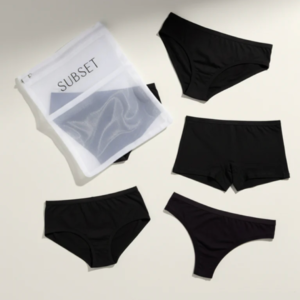
SUBSET Mid Rise Thong — Score: 90 (Full review here)
Organic cotton, great fit, all-day comfort. SUBSET earned its Excellent rating with solid construction and a thong that actually works for everyday wear — no adjusting required.
Very Good (80–89): Solid Organic Cotton Options
Pact Organic Everyday Classic Fit Thong and Bikini — Score: 87, 87 (Full review here)
Pact is an accessible organic cotton brand with a large product portfolio. The thong has a minor wedgie issue across M & L sizes — size up. The bikini’s lower front seam may hit a C-section scar, so worth flagging for postpartum wearers, but overall is a comfortable everyday fit.
Pact Organic Everyday Boyshort — Score: 83
Minor compression in the leg but otherwise comfortable and a solid choice, especially as a sleep option.
Good (70–79): Decent, But With Caveats
Pact Organic Everyday Lace Thong — Score: 74
Scored down for a lack of material disclosure on the lace waistband. A reminder that “organic cotton” in the body doesn’t guarantee transparency about every component.
Aerie Superchill Cotton High Waisted Boyshort and Cotton Rib Thong — Score: 71, 71
Conventional cotton, decent construction, comfortable waistband on the rib thong. Rolls up on the leg in the boyshort. The thong, I have on a partially regular rotation.
Fair to Poor: Proceed With Caution
Aerie Superchill Cotton Picot Cheeky — Score: 64
Sheer fabric, can only wear for a couple of hours max.
Aerie Superchill Cotton High Rise Boyshort — Score: 63
Flimsy gusset, okay for sleep but not much else.
Amazon Essentials Cotton Thong — Score: 49
Gusset too narrow, waistband digs in. Skip it. If you’re curious why it received such a low score, check out my video review here.
Gap Organic Stretch Cotton Thong — Score: 0 (Disqualified)
Low-quality construction, not even close to true to size. “Organic” on the label does not guarantee a worthwhile product. Plus, the return process was annoying.
So, Is Organic Cotton Underwear Worth It?
Yes, with one important caveat. Organic cotton is the preferred choice for everyday underwear if you’re trying to reduce your potential toxin load and environmental impact. Since the performance is identical to conventional cotton, you’re not giving anything up — you’re just choosing a cleaner supply chain.
But my scorecards also make it clear that certification alone doesn’t make great underwear. The Gap Organic Thong was disqualified. The Pact Lace Thong lost points for incomplete material disclosure. Meanwhile, the best-performing organic cotton pairs — La Coochie and SUBSET — earned their scores through both clean materials and excellent construction.
The takeaway: organic cotton + good construction = the everyday underwear sweet spot.
See for yourself: shop my favorite styles
When to Go Beyond Organic Cotton: High-Sweat & Active Days
For high-sweat environments or activities, the top overall scorer — Huha’s TENCEL™ Mineral Underwear — points to a different material category entirely.
TENCEL™ (lyocell) is derived from sustainably sourced wood pulp and is naturally more moisture-wicking and temperature-regulating than cotton. It’s buttery soft and performs significantly better than cotton when your body is working hard.
Zinc oxide in the gusset is where things get particularly interesting for vaginal health. Zinc oxide is a pharmaceutical-grade mineral with natural antibacterial and anti-inflammatory properties. Clinical evidence supports its role in helping maintain a healthy pH environment in the intimate area — meaningful if you’re prone to BV, yeast infections, or general irritation. Huha’s gusset is the longest sewn-in gusset of any pair tested, providing full coverage where it counts.
The core idea: your body’s vaginal ecosystem is a self-regulating microclimate. Good underwear works with that system — keeping things breathable, balanced, and supported — rather than trapping heat and moisture or introducing chemicals that make the body’s job harder.
The fabric framework, simplified:
- Everyday wear → Organic cotton (La Coochie and SUBSET scored highest; Pact is a decent accessible option)
- Workouts, travel, high-sweat days → TENCEL™ with zinc oxide lining (Huha, score: 93)
Related: Huha vs Subset: Best Underwear for Sweat vs Everyday Wear
What About Bamboo and TENCEL™ for Everyday Wear?
Bamboo and TENCEL™ come up a lot in the “clean underwear” conversation. Here’s the honest breakdown:
- Bamboo viscose goes through a chemical-heavy manufacturing process. The end fiber doesn’t retain many of the bamboo plant’s natural properties, and labeling can be misleading. It’s not a bad fabric, but it’s not the eco-miracle it’s often marketed as.
- TENCEL™ lyocell is produced in a closed-loop process that recaptures and reuses solvents, making it genuinely more environmentally sound. It’s excellent for active and warm-weather use — and when paired with zinc oxide (as in Huha), it’s a strong functional choice for vaginal health.
For everyday, lower-activity wear, organic cotton remains the most straightforward and accessible option. TENCEL™ shines when performance and vaginal health support are the priority.
What Certifications Should You Look For?
- GOTS (Global Organic Textile Standard): Covers the entire supply chain from farm to finished garment. The gold standard — not just the fiber, but the dyes, finishes, and processing too.
- OEKO-TEX Standard 100: Tests the finished product for harmful substances including PFAS, heavy metals, and azo dyes. Strong reassurance even if the fiber isn’t certified organic.
- USDA Organic: Applies to U.S.-grown fiber but doesn’t always cover downstream processing.
Ideally, look for GOTS and OEKO-TEX if you want the most complete picture. And if a brand can’t tell you what every component of their underwear is made from — including the waistband and lace trim — that’s worth paying attention to.
FAQ: Is Organic Cotton Underwear Worth It?
Does organic cotton underwear actually make a difference for your health?
It can, particularly by reducing your potential exposure to pesticide residues, synthetic dyes, PFAS, and formaldehyde-based finishes that may remain in conventional fabrics. The intimate area has thinner, more sensitive skin, making it one of the most important places to consider what your clothing is made of. The research isn’t definitive on exact absorption levels, but reducing unnecessary chemical exposure in that area is a reasonable precaution.
Is organic cotton underwear better for vaginal health?
Organic cotton is breathable and free of harsh chemical finishes, making it a solid everyday choice for vaginal health. For higher-sweat situations or for people prone to BV or yeast infections, TENCEL™ underwear with a zinc oxide-lined gusset (like Huha) may offer additional support by helping maintain healthy pH balance and reducing bacterial growth.
What’s the difference between organic cotton and regular cotton underwear?
Functionally — breathability, softness, moisture management — they’re essentially the same fiber. The difference is in how it was grown and processed. Organic cotton avoids synthetic pesticides and GOTS-prohibited chemical finishes. Conventional cotton may retain trace residues from farming and processing. In real-world testing, the performance difference was negligible; the fit and construction differences between brands mattered far more.
Is organic cotton underwear worth the extra cost?
If budget allows, yes — especially for underwear, which has prolonged contact with sensitive skin. You’re not getting a performance upgrade, but you are reducing potential chemical exposure and supporting more sustainable farming. Look for GOTS certification to make sure the premium you’re paying is backed by real standards, not just marketing.
What is the healthiest underwear fabric?
For everyday use: GOTS-certified organic cotton is the most well-researched, accessible, and consistently recommended option. For active or high-sweat use: TENCEL™ with a zinc oxide-lined gusset (like Huha) offers superior moisture management and added support for vaginal health. Avoid synthetic fabrics like polyester and nylon as the primary gusset material, as they trap heat and moisture and may contain chemical treatments.
Does organic cotton underwear help with yeast infections or BV?
Organic cotton is breathable and free of chemical irritants, which supports a healthy vulvar environment. It won’t treat an existing infection, but it can be part of a supportive approach. Zinc oxide-lined underwear (like Huha) has received strong anecdotal feedback from people prone to BV and yeast infections — zinc’s antimicrobial properties may help reduce the conditions that allow problematic bacteria to overgrow.
How do I know if my underwear is truly organic?
Look for GOTS certification — not just the word “organic” in marketing copy. GOTS requires third-party auditing at every stage of production. OEKO-TEX Standard 100 is also a reliable indicator that the finished garment has been tested for harmful substances. And if a brand won’t disclose what every part of the underwear (including waistbands and trim) is made from, that’s a transparency issue worth taking seriously.
Can I wear organic cotton underwear for working out?
You can, but cotton absorbs moisture rather than wicking it away, which becomes uncomfortable during sweaty workouts. For exercise, TENCEL™ with moisture-wicking properties is a better choice. Huha’s mineral underwear — the top scorer in this entire review — was specifically noted as ideal for workouts.
What are the best organic cotton underwear brands?
Based on hands-on testing and scoring: La Coochie (scores 91–92) is the top organic cotton performer, followed by SUBSET (90) and Pact (82–87 depending on style). For TENCEL™ with zinc oxide, Huha (93) is the top overall pick, especially for activewear.
The Bottom Line
Organic cotton and conventional cotton perform the same so if you’re choosing between the two, the case for organic comes down to reducing your potential toxin load and supporting better environmental practices. That’s a meaningful reason to make the switch, especially for something worn this close to your body every day.
My real-world scorecards reinforce this: the best-performing everyday underwear pairs were organic cotton with excellent construction — La Coochie and SUBSET at the top, Pact as a solid accessible option. The worst performers (Amazon Essentials, Gap Organic) prove that neither a low price point nor an “organic” label guarantees quality.
For everyday wear, organic cotton is the move. For high-sweat days, workouts, or if you’re actively supporting vaginal health, TENCEL™ is the standout upgrade that works with your body rather than against it.
Your underwear is not a place to cut corners on ingredients or construction. You deserve to know what’s in it, and how it actually performs.